

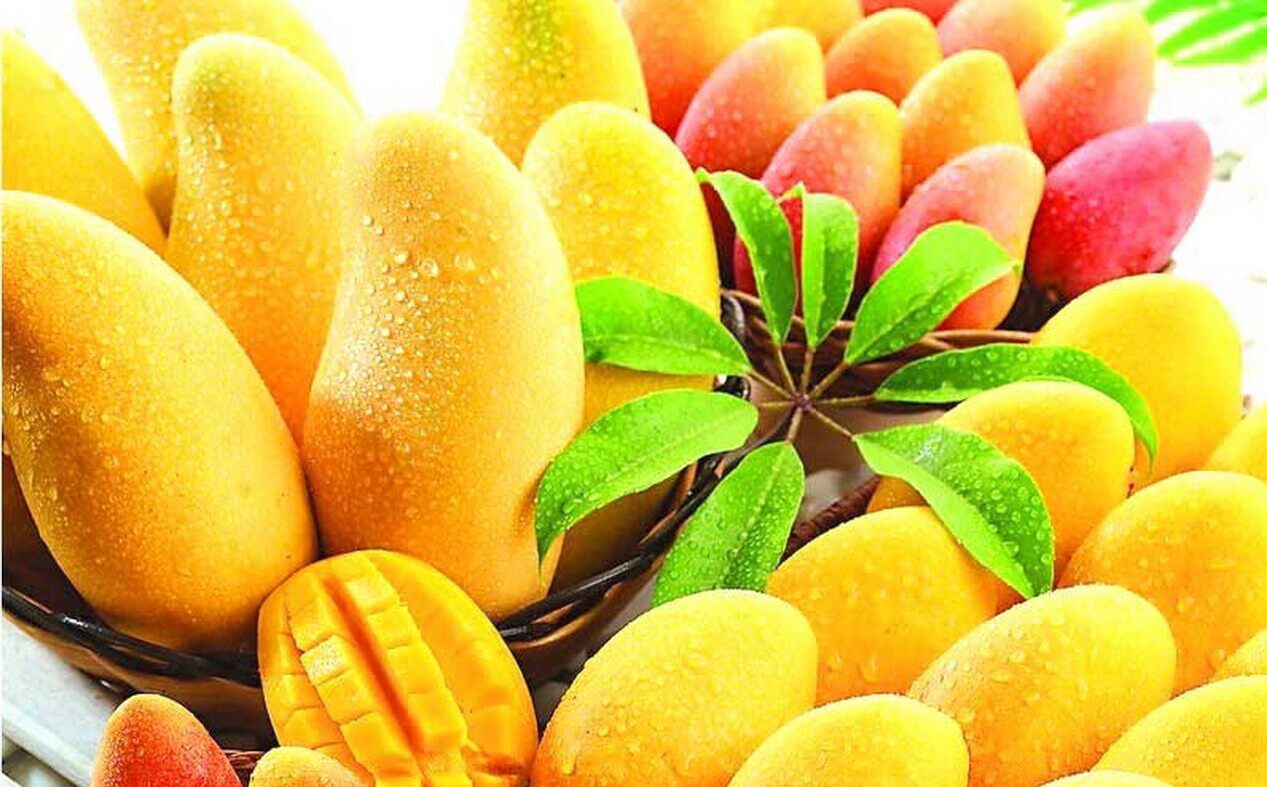
Mangoes are Pakistan’s only hope during the sweltering summers. We anticipate enjoying ice-cold mangoes kept in the refrigerator or in a bowl of chilly water in the freezer in May, June, and July as the days get longer and hotter. Mothers are tasked with storing the ripe and unripe mangoes strategically so that the ripe ones are consumed first and the unripe ones can rest for a few more days in the box before being moved into cold storage. Fathers bring boxes full of ripe and unripe mangoes home.
The great mango dispute frequently revolves around graft-grown (qalmi) mangoes, which are more widely available commercially and are known to be fleshier and sweeter than seed-grown (tukhmi) mangoes.
Mangoes are a delicate fruit that quickly blemishes. Because of this, they are harvested from trees when they are still largely unripe and placed in wooden crates where they age over time while being transported, sold, and stored. To avoid additional ripening and eventual deterioration, it is advisable to store them in cool temperatures after they have ripened.
Here are some of the locally cultivated and beloved mango kinds that are most renowned.
Green but ripe langra
Although it’s unclear why a mango would be given the moniker langra, which means “lame” in Urdu, langra is typically the first of its friends to arrive at the market. Langra is a product of South Punjab, a wealthy region, where it was raised.
Langra is a product that is native to the areas surrounding Rahim Yar Khan and Multan, and it is sold there throughout the months of May, June, and July. Its delicate skin, which doesn’t turn the distinctive yellow mangoes are known for until they are fully ripe, allows it to stand out among such a diverse array of mangoes.
Anwar Ratol, the little king
Anwar Ratol, another gem in Punjab’s crown, debuts on the market twice, once in May and again between July and August. Ratol is what I refer to as nature’s candy because I’ve never encountered one that wasn’t overly sweet. In fact, I find its sweetness to be very overpowering because I don’t really have a sweet tooth. But I’m aware
People who, because to its distinctive fragrance, taste, and small size, simply lose track of how many they’ve consumed at a time.
Chaunsa is the finest
The subtle differences in the sweetness and fibre content of these four types of this delectable mango are only apparent to a true chaunsa aficionado. Due to its outstanding sweetness and juice-running-down-the-arm qualities, it would not be an unreasonable assertion to say that chaunsa is one of the most beloved mangoes, not just in Pakistan but also throughout the world. It simply doesn’t get any better than this, I’m telling you.
Sindh’s special,Sindhri
The Sindhi, which originated in the same-named town in the district of Mirpurkhas and frequently grows to be larger than the normal hand, is the pride of Sindh.
In addition to its larger-than-average size, sindhri is renowned for its distinctive smell and the distinctive yellow colour that covers its sparsely fibrous flesh, which can range from deliciously acidic to delicately sweet during Dussehri, which brings out the little firearms.
Dussehri…a small treat
Round and petite dussehri mangoes enter the market during the first two weeks of July and replace almost every type of dessert in Pakistan. The Mirpurkhas and Hyderabad districts of Sindh are where these mangoes are mostly grown. Despite their diminutive size, dussehris have the juiciest, pulpiest flavour and pleasure their customers for an unfairly brief period of time.
Mangoes are a symbol of the fragile equilibrium of our ecosystems, the beautiful individuality of each leaf and fruit that occurs in nature, and most importantly, Thanks to nature take care of the environment that supports us in such amazingly sweet ways.
