

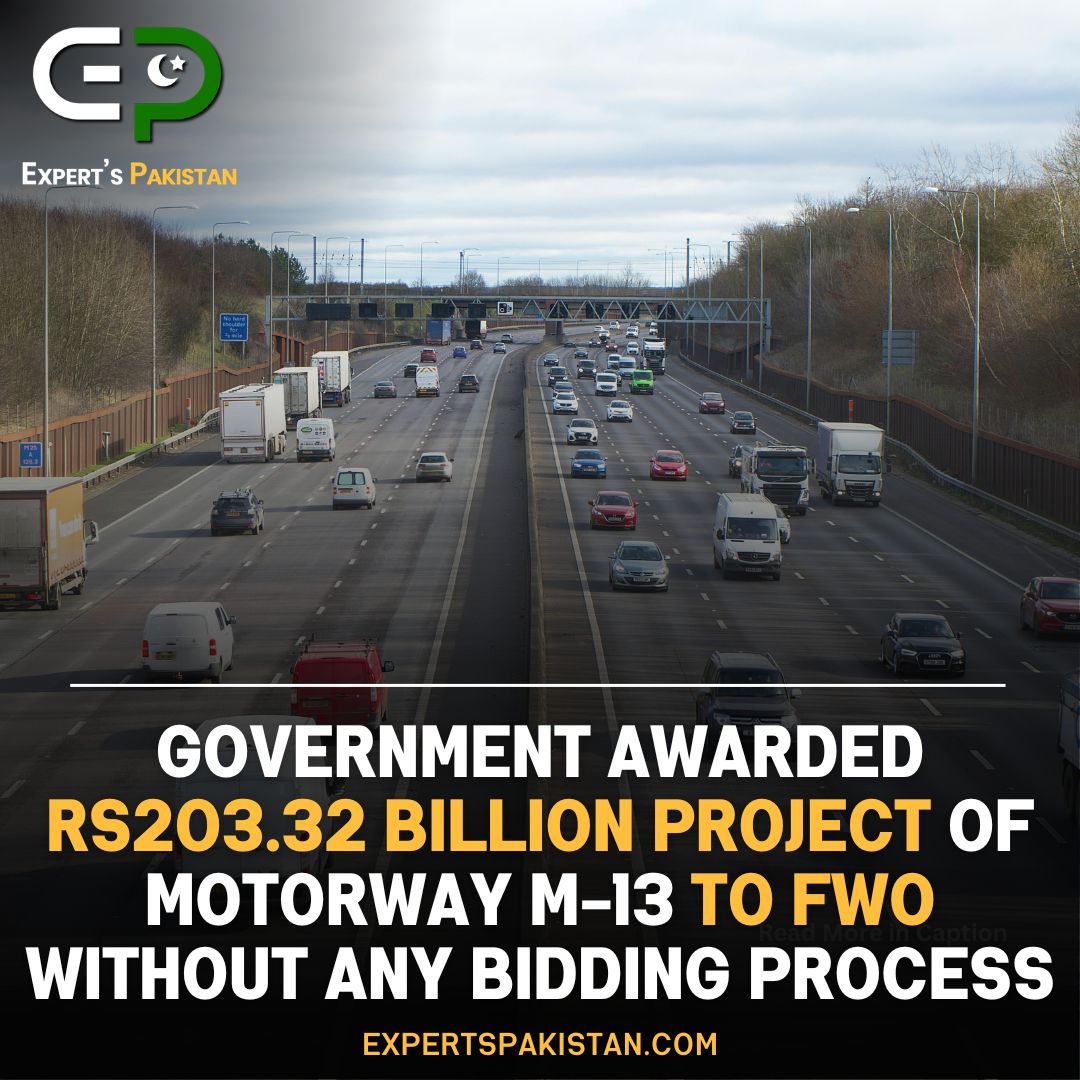
In a classic case of “rules are made to be broken,” the government has decided in principle to hand over the Rs. 205 billion Kharian-Rawalpindi Motorway (M-13) project to the Frontier Works Organisation (FWO)—and here’s the kicker: without open bidding.
The proposal, which was approved by the Board of Directors of the Public Private Partnership Authority (P3A), was recommended by the National Highway Authority (NHA). Their reasoning? FWO is “in a position to begin work immediately.” Because who has time for competitive bidding when there’s a road to build?
The government invoked provisions of the P3A Act that allow for negotiated procurement, bypassing the usual competitive process. Interestingly, ECNEC had approved the project in April with a clear directive: international competitive bidding. But apparently, that was just a suggestion.
Why the Motorway Matters
The M-13 is expected to shorten the distance between Lahore and Rawalpindi by approximately 100 km and reduce travel time by over an hour compared to the existing M-2. A welcome development for commuters—assuming the project doesn’t hit the usual delays, cost overruns, or transparency issues.
What Happens Next?
The proposal now heads to the federal cabinet for final approval. If given the green light, the project will be developed under the Build-Operate-Transfer (BOT) model.
The Bigger Question
While the motorway promises convenience, the decision to bypass open bidding raises important questions about transparency, accountability, and fair competition. Will this “shortcut” ultimately benefit the public or just a select few?
Disclaimer: This post is for informational purposes only and is based on publicly available reports.
